 Paulownia [桐, kiri] is the name of a suit in traditional hanafuda decks. It is generally taken to be the twelfth and final suit, representing the month of December [12月, jūnigatsu] or the number 12.
The cards in this suit all feature large paulownia leaves with purple flowers and capsules. There are three Chaff cards and one Bright. The Bright card features a purple and red Phoenix [鳳凰, hōō] above the paulownia plant, with the area below the plant generally colored yellow.
In a few games, including Tensho, an alternate month ordering is used, with the Paulownia suit representing June or the number 6 instead. On the other hand, in the Korean suit order, Paulownia is considered to represent November or the number 11.
¶ Cards
¶ Phoenix
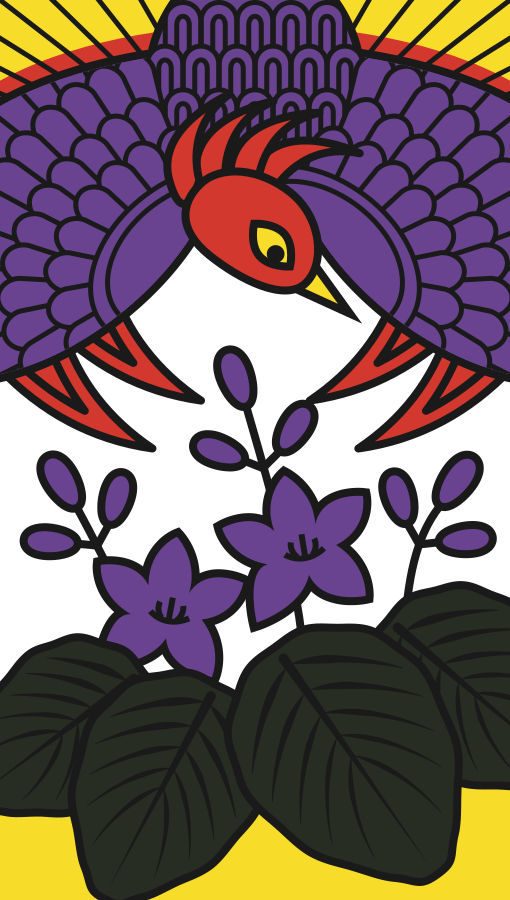 Paulownia with Phoenix [桐に鳳凰, kiri ni hōō], or simply Phoenix, is the Bright card of the Paulownia suit.
¶ Chaff
The Paulownia suit uniquely has three Chaff cards. One of the three Chaff cards generally has a colored area below the paulownia. Some combination of these three cards usually feature the name of the deck’s manufacturer, that company’s logo, and/or other information about the deck.
¶ Yellow-bottom Chaff
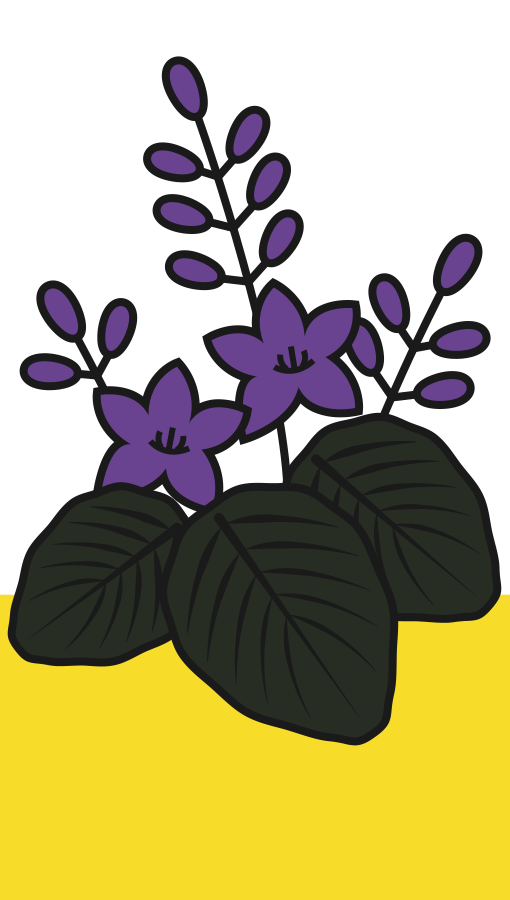 One of the Paulownia Chaff cards is usually marked with a different-colored background on the bottom of the card, typically yellow in Japan and red in Korea. In Japan it is also known as yellow Chaff [黄カス, ki-kasu] or (Paulownia’s) different-colored Chaff card [(桐の)色違いのカス札, (kiri no) iro-chigai no kasu-fuda].
In most games it is not distinguished from the other two chaff cards, but some games do make a distinction. For example, in the game of Go-Stop it has the same value as two chaff cards, and in the games of Roppyakken and Sakura it has the same value as a Ribbon card.
¶ Other Chaff
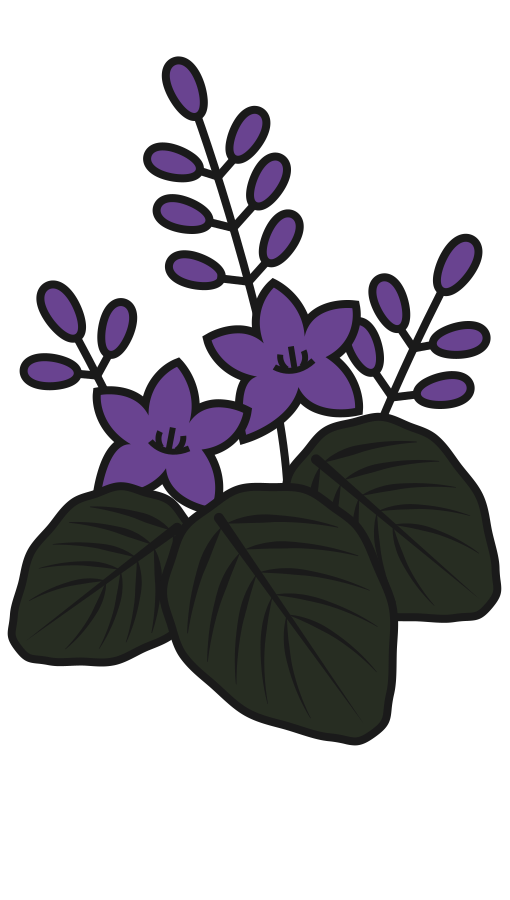
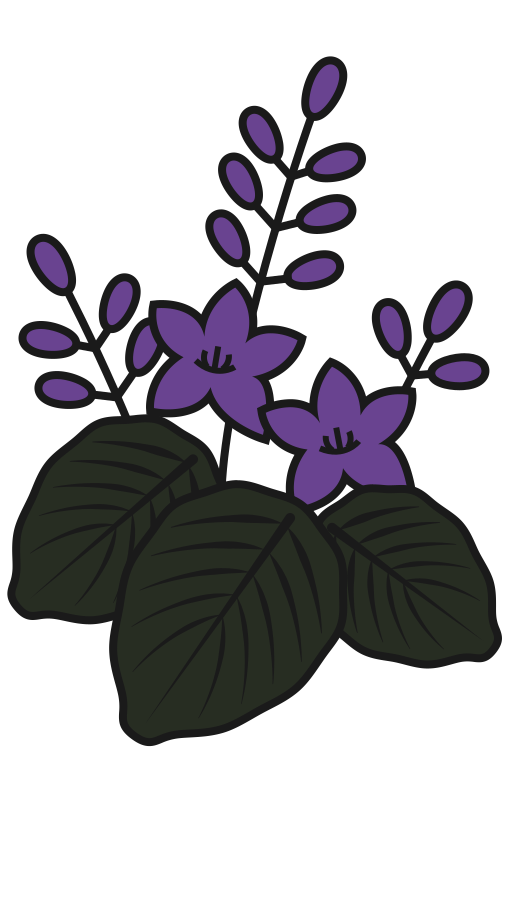 The two Paulownia Chaff cards with all-white backgrounds are treated as regular Chaff cards in almost all games.
¶ External links
For examples of traditional art with the same motifs as this suit of hanafuda, see also the following category on Wikimedia Commons:
¶ Bibliography
- Ōishi Tengudō, “花札の謎シリーズ!12月札『桐に鳳凰』,” blog post, November 2013.
- Rin & Char, “各月に描かれた絵柄の意味,” りんとちゃーの花しらべ, blog post, September 2019.
- Hanafuda Hawaii, “Symbols and Motifs in Hanafuda,” March 2025.